

When You’ve Never Felt “Normal”
Exploring The Cultural Pipeline from Weird Kid to Adult With a Mental Disorder.

There’s a particular kind of ache that comes from growing up feeling different, not “quirky in a cute way” different, not “secretly gifted” different, but different in a way that makes you feel wrong. And the kicker?
The world will not let you forget it.
It’s there in the way you move through your earliest memories, sensing without knowing that the rules everyone else seems to follow weren’t handed to you. It’s in the way you learn, almost immediately, that something about you doesn’t quite fit. You don’t know how to name it yet, but your nervous system does, scanning, adjusting, bracing, and trying to match your internal rhythm to the world around you.
Childhood: Where the Story Starts
It starts before you even have words for it. You just know you’re out of step. Other kids seem to have the unspoken rulebook, how to talk, how to dress, how to belong. You’re still standing at the edge of the playground trying to figure out the entry point. They glide through group projects, birthday parties, and team sports like they were born knowing how to do it. You, on the other hand, are learning that belonging has a buy-in, and you don’t have the right currency. And here’s the thing about kids: they notice. They notice when you’re not quite “one of them.” They might not say it outright, but it shows in the subtle exclusion, the sideways glances, the way you’re the last one picked. You get put in the “other” category before you even understand what categories are.
Kids rarely have the developmental capacity to think, Maybe I’m just different in a way that’s not valued here. Instead, the translation is much more personal: I’m not likable. I’m too much. I’m not enough. Whatever the exact wording, it becomes the lens you see yourself through. And that lens doesn’t just sit in your mind — it wires itself into your nervous system.
You adapt to survive. You learn to scan every room for cues about how to act. You figure out what version of yourself might be the least rejectable. You learn to shrink in some spaces, perform in others. You perfect the art of reading the room before you even enter it. And because these strategies work just enough to keep you from being completely left out, they become your default operating system. You don’t even realize you’re running on self-surveillance, because to you, it’s just life.
And when that sense of wrongness isn’t just reflected by peers, but confirmed by the people you depend on, parents, caregivers, trusted adults, it hits even deeper. Maybe it’s said outright in moments of frustration: What’s wrong with you? Why can’t you just…? Or maybe it’s more subtle: the sighs, the comparisons to other kids, the way your feelings are dismissed or minimized. These moments etch themselves into your nervous system, because as a child, you can’t separate I’m different from I’m bad. You can’t reason that maybe the problem isn’t you, because when the people you love and rely on tell you you’re wrong (verbally or nonverbally), your survival brain believes them. And you carry that belief forward, often for decades, until it becomes a quiet background hum you can’t turn off.
Adolescence: When “Not Normal” Becomes the Crime
By the time adolescence hits, “normal” isn’t just a preference — it’s a social economy. For someone who has carried the something’s wrong with me narrative since childhood, every missed milestone isn’t just a disappointment, it’s evidence. Didn’t get invited to the party? Evidence. Didn’t make the team? Evidence. Still awkward in your own skin? Evidence.
By now you’ve already got a well-worn track in your mind that says you’re behind, broken, or somehow off. And then the world hands you an even bigger scoreboard: grades, popularity, athletic performance, physical appearance, dating. These aren’t just milestones, they’re public report cards on your worth. Every hallway, every classroom, every locker room feels like a place where you’re being measured.
This is also when the voice of “you’re wrong” often shifts from the personal to the institutional. Teachers, coaches, and school systems don’t just highlight the ways you fall short, they pathologize them. Now your “different” is written in ink: needs improvement, disruptive, unmotivated, shy, too much, too quiet. You hear that you’re not living up to your potential, but no one stops to ask if the environment was ever built for someone like you. And if you push back, you risk being labeled as defiant, lazy, or difficult. These authority figures might not be malicious, but their feedback often confirms what you’ve believed since childhood: that who you naturally are is not who the world wants.
And adolescence has no patience for people who are “figuring it out.” You either keep up or you get left behind. If you can’t, you’re not just different, you’re behind. And the more behind you feel, the more desperate you become to crack the code. You push harder, mask better, try to mimic the moves of people who seem to belong effortlessly. Inside, the gap between who you are and who you think you need to be gets wider and heavier to carry.
Adulthood: The Diagnosis Era
Then adulthood arrives, and instead of freeing you from the game, it simply changes the rules. There’s a new checklist: career success, marriage, kids, home ownership, financial stability. If you’re not hitting these markers in the “right” order or at all, the old narrative doesn’t just resurface, it digs in deeper.
If you make it to adulthood without being officially labeled, the modern mental health and self-improvement industries are waiting with a different kind of validation: diagnosis. Sometimes this is life-changing in a good way, finally having language for your experience can feel like relief. But other times, it becomes another stamp in your file that says see, we told you something was wrong with you.
Workplaces, partners, and even healthcare providers can unintentionally reinforce the same dynamic. Performance reviews that focus on your “areas of improvement” instead of your strengths. Romantic partners who treat your sensitivity, emotional needs, or intensity as something to fix. Doctors who reduce your lived reality to a checklist of symptoms without considering the system you live in. By now, the voice of “you’re wrong” is no longer coming just from other people, it’s completely internalized. You self-edit in meetings. You bite your tongue in relationships. You pathologize your own exhaustion as weakness instead of seeing it as the cost of surviving in a culture that was never built for you.
The culture reinforces it every chance it gets. When are you going to settle down? When are you having kids? Why haven’t you bought a house yet? The underlying message is the same one you’ve been hearing your whole life: Why aren’t you living the way everyone else is? And even if you’ve built a life that works beautifully for you, there’s still a low hum of failure in the background because you’ve been conditioned to measure your worth against a standard that never included you in the first place.
What This Looked Like For Me
I’ve known the feeling of being “different” for as long as I can remember. As a kid, it was less about standing out in a good way and more about sensing that who I was didn’t slot neatly into the social categories around me. I was shy, quiet, and observant, qualities that, in my childhood brain, translated to you’re invisible.
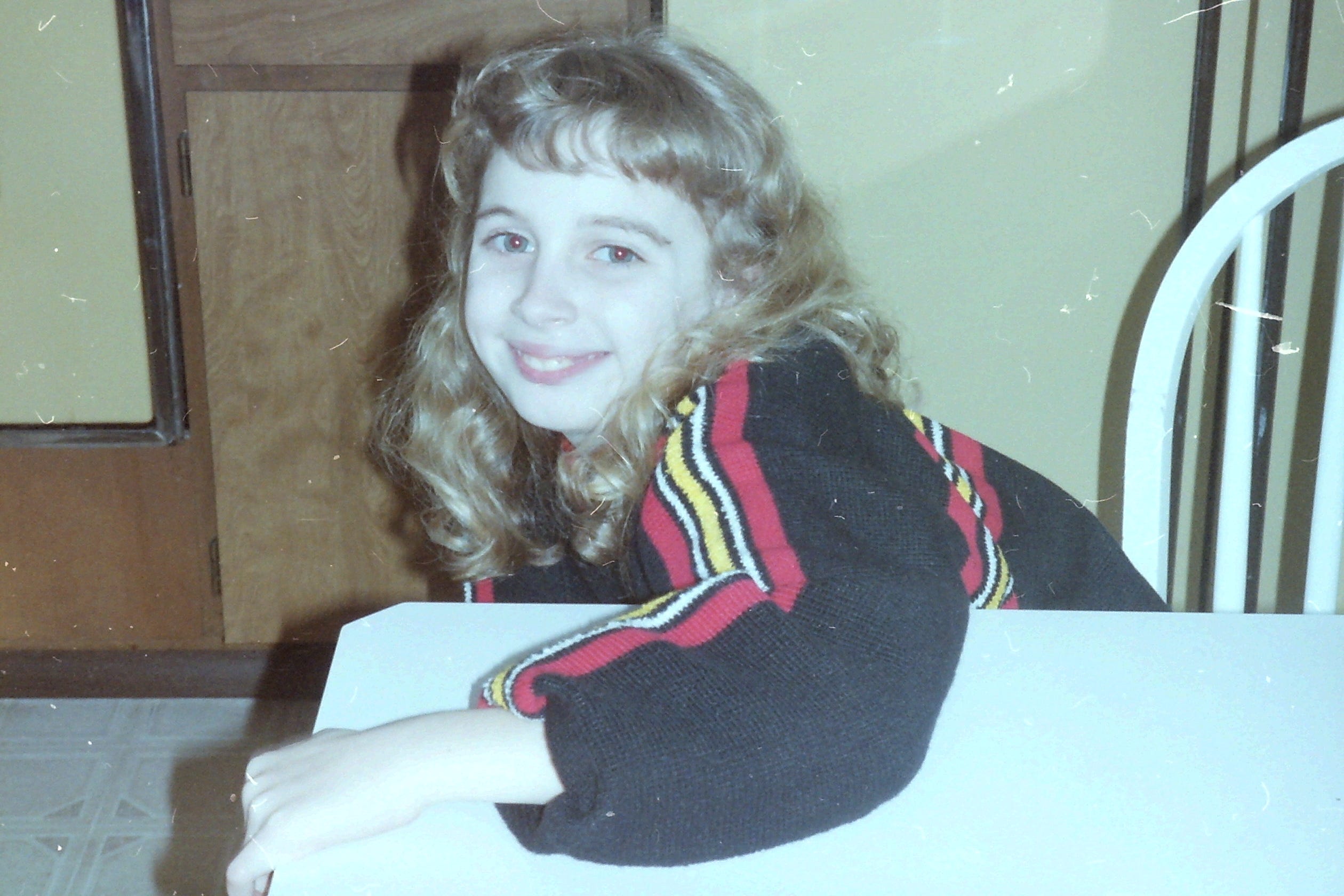
I watched the kids who seemed to move through the world effortlessly, the ones everyone wanted to sit next to at lunch or partner with in gym, and decided that the difference between them and me must be something on the outside. Prettier. Cooler clothes. Louder laugh. A little more something that made people choose them.
So I adapted. I learned to read the room before walking into it. I could figure out who I needed to be to belong, a chameleon switching colors to match the group. I downplayed my own needs and leaned into whatever would keep the peace, keep me “acceptable,” and keep me close enough to feel included, even if I never quite fit.
It worked… sort of. People liked me. I was easy to be around. But deep down, I was still building a life around other people’s comfort, scanning constantly for signals that I was doing it “right,” and quietly filing away all the moments that confirmed I was still, somehow, wrong.
And that’s the thing about these early adaptations, they don’t go away just because you grow up. They become the blueprint for how you navigate high school cliques, workplace politics, romantic relationships, and even your own self-image. The world tells you to just “be yourself,” but if you’ve been taught that yourself is somehow defective, you’re left trying to be someone else just to fit in to the world.
What Happens When the “You’re Wrong” Story Lives in Your Brain
By the time you’ve heard you’re wrong enough, from parents, peers, teachers, bosses, partners, and now yourself, your brain has built a well-paved neural superhighway for it. It’s no longer an occasional thought; it’s the default lens through which you see yourself.
The narratives are painfully predictable: I’m too much. I’m not enough. I’ll never get it right. If I relax, everything will fall apart.
You start scanning every interaction for proof, and of course, you find it. Over time, this constant self-surveillance and mistrust of your own instincts shows up in diagnostic language, anxiety, depression, ADHD, “personality disorders.”
And because our culture loves to address symptoms instead of root causes, you learn to cope in ways that keep you functioning, overworking, over-pleasing, numbing, avoiding, until you eventually hit a point where the mask cracks. That’s often when you “fall apart,” not because you’re weak, but because you’ve been holding the weight of constant self-negotiation for decades, and your body finally calls your bluff.
When “Different” Finally Gets Pathologized
And the part that can sting? Living in a culture obsessed with productivity, conformity, and control, not fitting the mold doesn’t just get you side-eyed, it gets you labeled. If you’re anxious, depressed, burned out, can’t focus in a cubicle, or can’t “just get over it” like other people seem to, those patterns get named. Diagnosed. Medicalized. And for some, that diagnosis is validating, even life-saving. But for many, what’s being diagnosed isn’t a malfunction, it’s an adaptation.
The kid who couldn’t sit still becomes the adult with ADHD. The shy, watchful kid becomes the adult with social anxiety disorder. The sensitive, intense kid becomes the adult with borderline personality disorder.
The system looks at you and says, See? We told you something was wrong. But the truth is, your nervous system was doing exactly what it needed to survive an environment that wasn’t built for you to thrive in as a human being.
And ultimately we end up here because it’s easier for society to label you than it is to look at itself. It’s easier to tell you you’re the problem than to redesign school so it works for different learning styles. Easier to medicate your burnout than to challenge the way we structure work. Easier to push you to “just put yourself out there” than to examine why so many social spaces feel unsafe or unwelcoming.
The message is clear: adapt to become one of “us”, or we’ll call it a disorder.
Reclaiming Your Story
Falling apart isn’t the end, it’s the nervous system finally refusing to run a marathon on an empty tank. That breaking point, as brutal as it feels, is often the first real moment of truth. It’s the place where you stop asking, How do I fix what’s wrong with me? and start asking, What if nothing was wrong in the first place?
Because here’s the thing: not feeling “normal” in a world that defines normal by conformity is not a defect. It’s biology doing its best in an environment it wasn’t designed for. It’s the accumulation of survival strategies, vigilance, withdrawal, perfectionism, self-silencing, that worked once and now need to be rewritten.
The path forward isn’t about erasing the parts of you that adapted. It’s about understanding them, working with your wiring instead of against it, and surrounding yourself with people, environments, and practices that make your nervous system feel safe enough to rest.
You don’t have to become “normal” to belong.
You just have to learn to belong to yourself first, and then let the rest of the world adjust accordingly.